If you had told me a few years ago that I'd recommend GitHub to designers, I probably would've laughed. GitHub was always the developers' place — a platform for repositories, pull requests, version control, and things most designers never needed to think about.
But if there's one thing the past couple of years have taught us, it's this: the line between design and development is disappearing. And AI is the biggest reason why.
Designers Are Building More Than Ever
A few years ago, a typical design workflow looked something like this: Research → Wireframes → UI Design → Handoff. Today, it looks more like: Research → Wireframes → UI Design → Prototype → AI → Landing Page → Functional MVP. That's a huge shift.
Designers are no longer stopping at Figma. We're using AI tools to build websites, generate code, create interactive prototypes, test ideas, and even launch products ourselves. Tools like Cursor, Bolt, Lovable, GitHub Copilot, Claude, and many others have made building accessible to people who don't have years of programming experience.
Does that mean designers are replacing developers? Not at all. It simply means designers can now explore ideas further before handing them off — or even validate an idea before writing a single line of production code.
GitHub Isn't Just for Code Anymore
When most people hear "GitHub," they immediately think of developers. I think that's changing. To me, GitHub is becoming something much bigger — a place where you can:
- Document experiments.
- Share side projects.
- Track your progress over time.
- Collaborate with others.
- Show how you solve problems.
- Build in public.
Your portfolio tells people what you created. GitHub tells people how you created it. And that distinction is becoming increasingly valuable.
Your Portfolio Shows the Finish Line
A Behance project is polished. It tells a story. It highlights your best work. That's exactly what it's supposed to do.
GitHub tells a different story. It shows your iterations, your mistakes, your experiments — the problems you encountered, the features you built, the ideas you abandoned. In many ways, it showcases your thinking process rather than just the final outcome.
“As someone hiring designers, I would love to see both. One demonstrates taste. The other demonstrates curiosity.”
AI Is Changing What Clients Expect
One thing I've noticed recently is that clients are starting to ask different questions. Instead of "Can you design this?" they're asking "Can you help us build it?", "Can you create an interactive prototype?", or even "Can you launch a working version so we can test it?"
The expectations are evolving. Knowing how to use AI to turn a design into something interactive is becoming an incredibly valuable skill — not because you're replacing a developer, but because you're removing friction from the process.
You Don't Need to Be a Developer
This is where people usually misunderstand my point. I'm not saying every designer should learn advanced JavaScript, React, or backend development. I'm saying every designer should understand enough about building products to communicate better with developers and use modern AI tools effectively.
Think of it like this: learning GitHub today is similar to learning Figma a few years ago. At first, it felt like something only a certain group of people needed. Now it's part of almost every designer's workflow. I wouldn't be surprised if GitHub becomes just as normal for designers over the next few years.
Build in Public
One thing I really like about GitHub is that it encourages building in public. You don't need a perfect project. You don't need thousands of lines of code. You don't even need something finished — sometimes the most valuable thing you can share is your progress.
A simple landing page. A small AI experiment. A personal tool. A workflow automation. Those small projects show something that polished portfolios often can't: that you're curious, that you're constantly learning, that you're willing to experiment. And honestly, those are qualities that matter more than ever in today's industry.
So... Will GitHub Replace Behance?
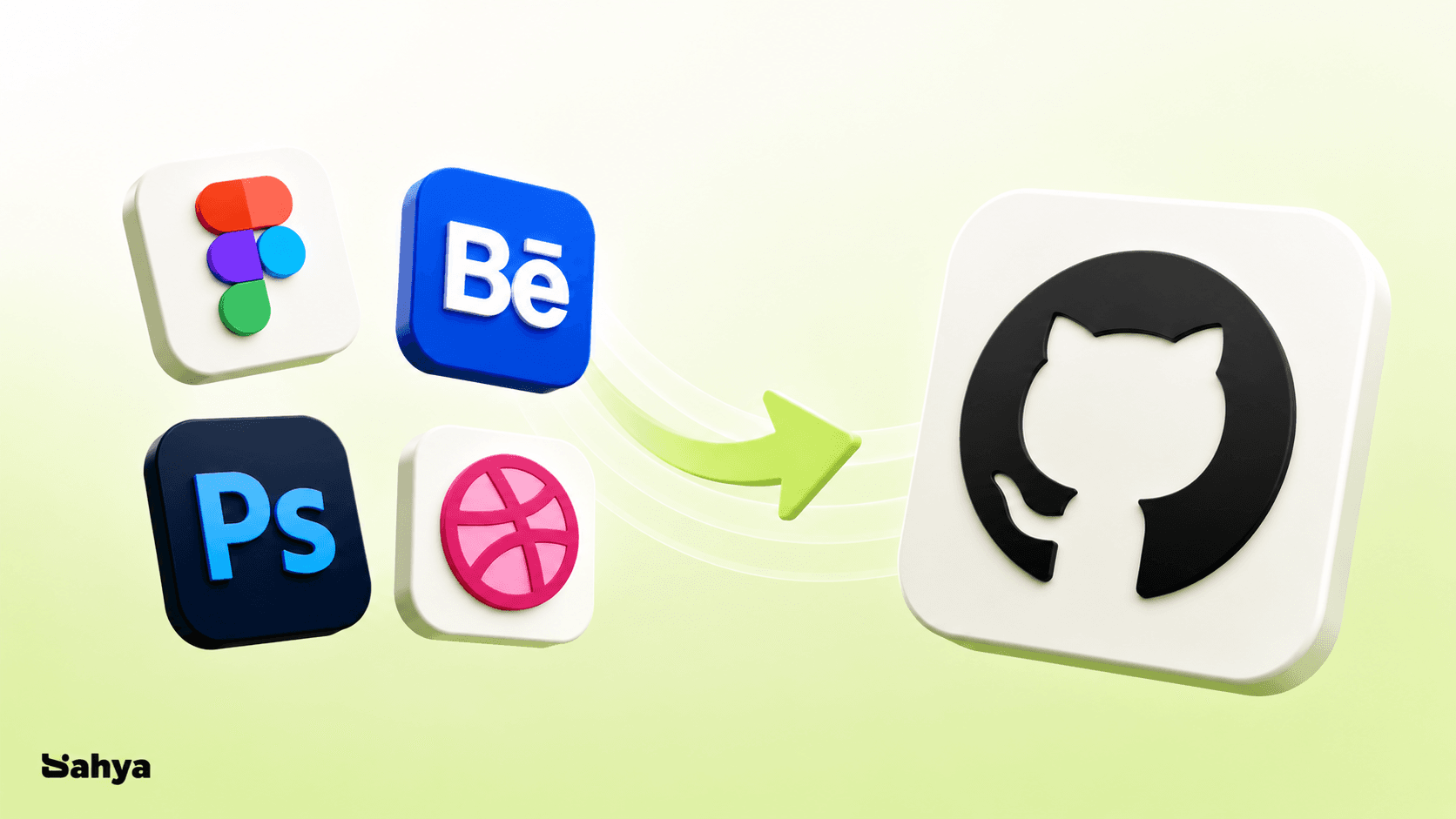
I don't think so. Behance exists for visual storytelling. Dribbble exists for showcasing design. GitHub exists for showcasing creation. They're not competitors — they're complementary.
Behance answers: "What did you make?" GitHub answers: "How did you make it?" Both stories matter.
My Take
I think the definition of a designer is changing. The best designers won't just create beautiful interfaces — they'll understand products, prototype ideas, experiment with AI, automate repetitive work, and collaborate more closely with developers. And they'll build.
That's why I believe every designer should have a GitHub profile. Not because GitHub is replacing Behance. Not because every designer needs to become a developer. But because building is becoming part of what it means to be a modern designer.
And I think the designers who embrace that shift early will have a huge advantage over the next few years.